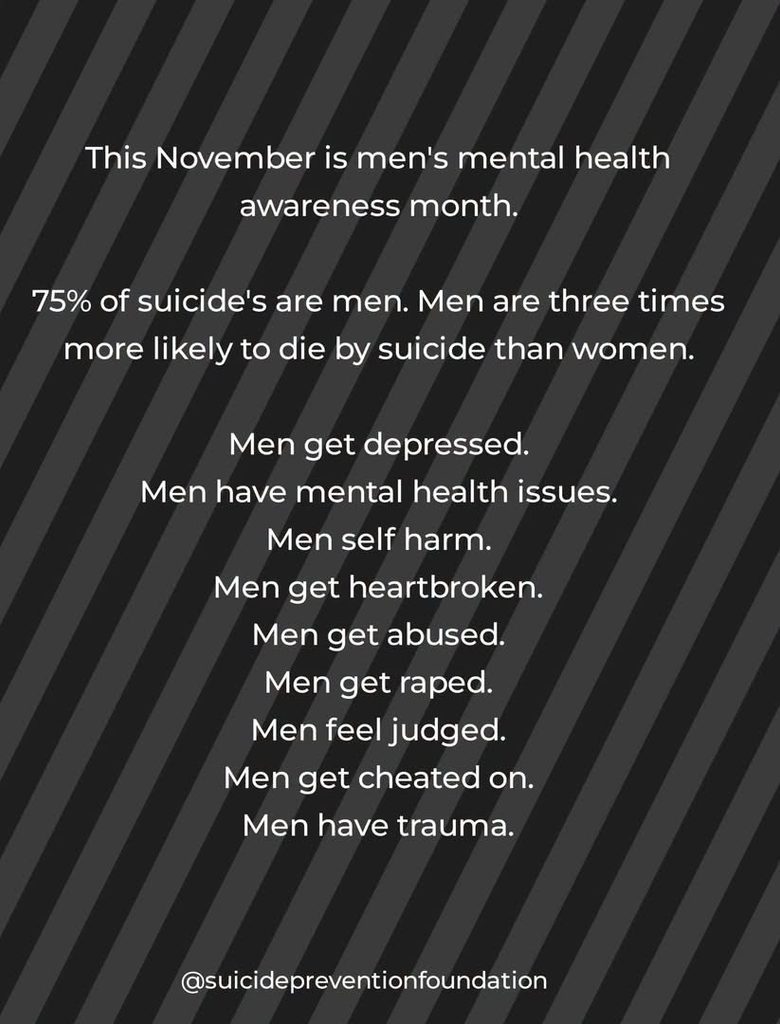
November is Men’s Mental Health Awareness Month.
This seems like a good time to talk a little about functional depression.
Functional depression is a type of depression that has the signs of depression but the person still goes to work, pays bills, and does other such things that people with regular depression stop doing.
Functional depression can be mild or moderate or severe.
You can still live life and want to end your own, if the depression is severe enough.
Functional depression is a persistent enemy of many many people.
If this applies to you, you may find it helpful to know that you’re not alone. If you don’t find it helpful… I never did either. But the fact is, you are not alone and you can beat the depression.
What’s it like?
A Personal Experience
I’ve had functional depression before, I’ve had it a few times. Toxic relationships, my undiagnosed autism didn’t help me, being bullied, etc.
I still managed to get up out of bed every day, went to school or work, went to church, ate, slept (not very well), was sort of social. I would seem down, but not too bad off… until I was alone.
It robbed me of any joy that I might have had. Any happiness was brief, and most of the things in life were temporary distractions at their best. All I wanted was for things to just stop. But things don’t stop, they just sort of… continue on.
And I needed those distractions, they helped keep me from sinking further and further down, but they didn’t improve my situation.
Key Signs and Symptoms
- You may feel empty, or low, or sad, or that you don’t matter.
- You might have chronic fatigue, or no energy (feeling exhausted no matter how much you rest).
- You have difficulty feeling joy or have a loss of interest in hobbies and a social life (Anhedonia).
- You may have difficulty concentrating, brain fog, or trouble making decisions.
- You might have more irritability, frustration, or inner anxiety.
- Your sleep and/or appetite changes (insomnia or oversleeping; under-eating or comfort eating).
- Maybe you have low self-esteem, self-criticism, or just feeling like an “imposter” or fraud.
- You might mask or minimizing your pain (telling yourself, “I’m just stressed, lazy, or dramatic” or “I’m fine because I still go to work”).
- There can be other signs as well.
What I Did
A friend at the time invited me for coffee. We talked, he said I was severely depressed and advised me to go see a doctor. Which I did, which got me to a psychiatrist who got me some medicine and that helped, a lot.
It wasn’t quite as easy as that sounds, I got relief from SOME of the depression right away. It kept me from sinking more. But in practice, I had to go through a few different medications to find one whose side effects I could put up with and I had to get therapy and over a matter of years I had to make a few changes in my life where there were toxic relationships.
At some point, I was able to stop taking medication, and that was a huge victory for me.
Getting Help
As someone who has experienced functional depression before, the best advice I have is get help. I know it feels like there is no help, I know it feels hopeless and nothing will help, but that’s just the depression lying to you.
Maybe you’re surrounded by the kind of people who… let’s politely say, are “less helpful”, and those are the kinds of people you DO NOT confide in.
If you or someone you know is struggling with persistent exhaustion, emptiness, or hidden low mood, or if thoughts of self-harm emerge… get help. Get help now.
- If you are in immediate crisis: Call or text 988 to reach the 988 Suicide & Crisis Lifeline (US & Canada), available 24/7.
- To find local mental health care: Visit FindTreatment.gov to locate confidential, low-cost or insured behavioral health services near you.
- Reach out to a licensed therapist, counselor, or primary care physician to talk about what you’re carrying behind the scenes.